Sunday, September 18, 2011

Tweaks

the Prodigal, complete with tweaks
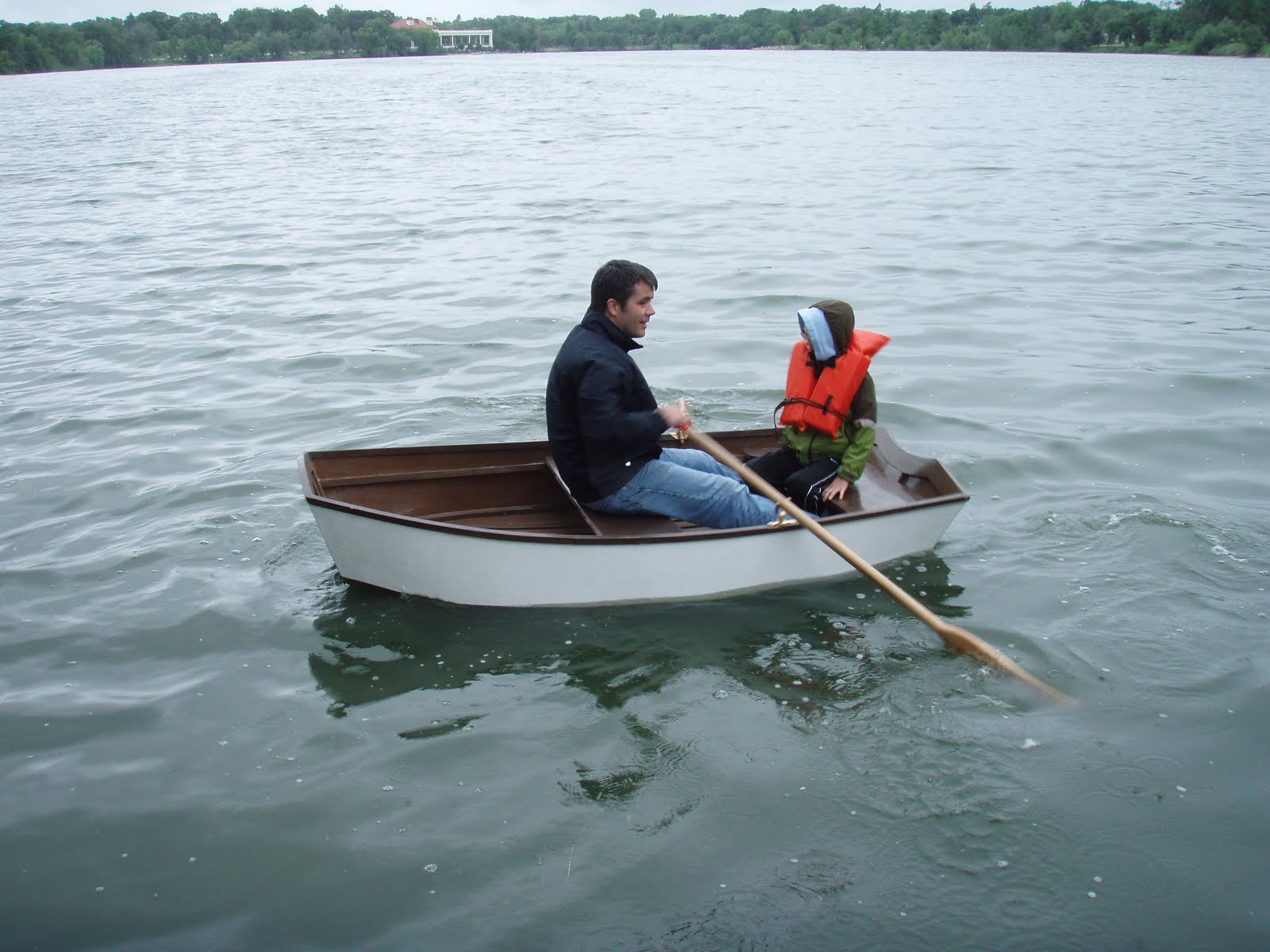
I've been rowing Lake Como a lot lately. Sorry, nothing new about that. Instead, I've been working on a few "tweaks" for my little boat.
The fourteen foot Alumacraft is probably the most popular boat in Minnesota

Here in Minnesota, the most common boat is the 14 foot Alumacraft. It's rugged, lightweight, inexpensive and dependable, a perfect choice for fishing. The trouble is that it's not necessarily the best choice for the city lakes. The Alumacraft needs to be trailered and parking is not always available at the launch sites. Outboards are not permitted in the cities and an electric trolling motor is useful, but the range is limited. One can always row, but this larger boat can be tough especially when the wind blows. It's just too long to row through the winding stream that connects Round Lake and Keller Lake. Finally, a few of the smaller lakes such as Como, Lake of the Isles, and Hiawatha do not have a launch ramp at all.

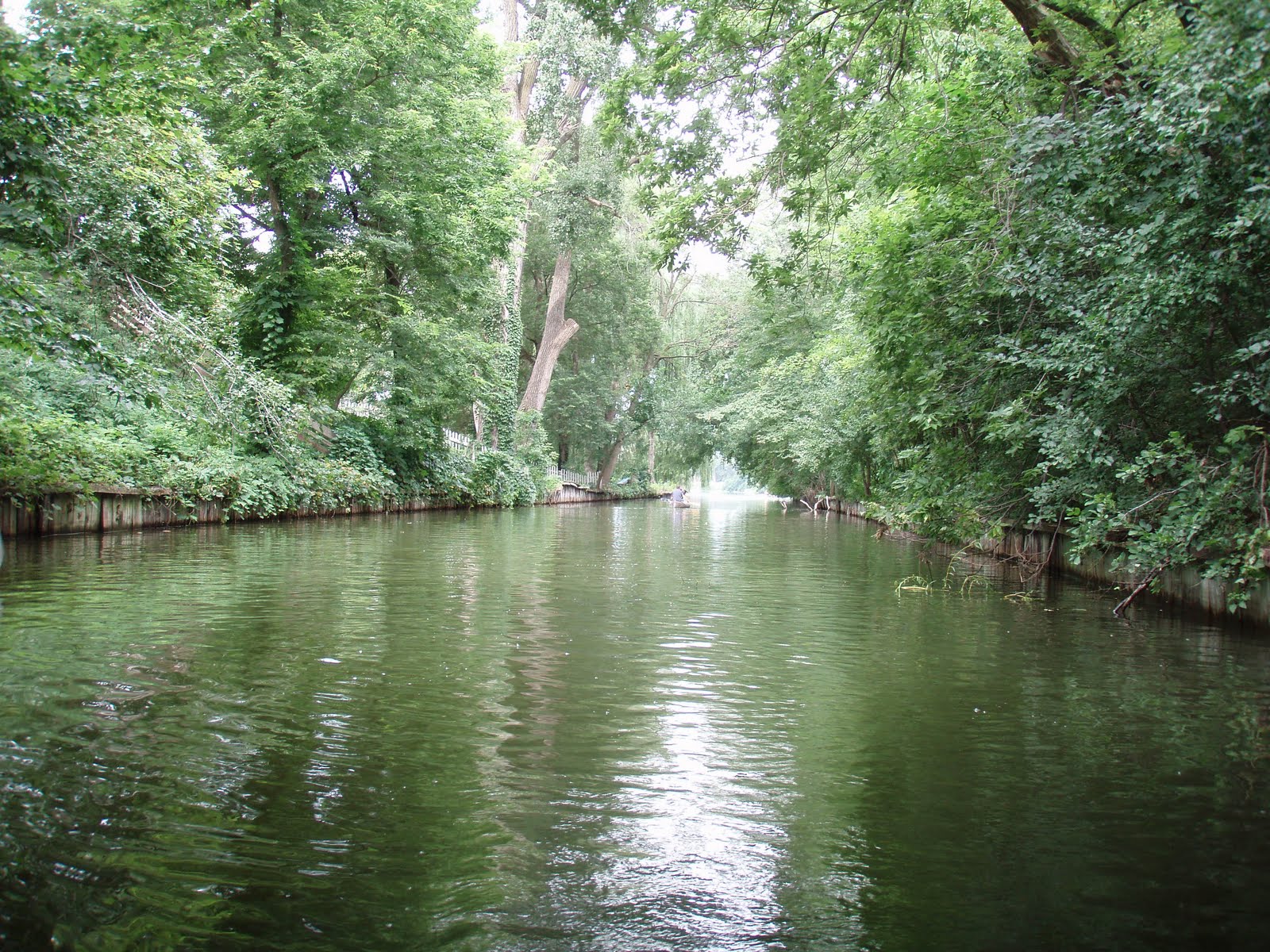
I must say that the Prodigal has proven to be a real nice little light water craft.  It's not the best for crossing open waters. It's pretty stable but it just doesn't glide like longer boats. But it's easy to transport, requires no trailer and you can carry it down to almost any shoreline. Most importantly, it's nimble enough to negotiate the narrower channels and bridges in the Chain of Lakes, Round Lake, etc. Little boats tend to track poorly. They do not row easily in a straight line. In these winding channels however, this is a real advantage. You can turn on a dime, pivot in place, and even get sideways to the current.

Nonetheless, I felt a need to tinker, to enhance the performance just a little. The Prodigal will never be a racer.  But that's not the point. Improved performance allows for greater range and, therefore, more time on the water.
A  "store bought" drop-in rowing unit
The first tweak was to remove the fixed seat in the center and install a home made drop-in rowing unit.  Mine is vaguely like the models found in racing craft. The principle is simple. A sliding seat offers the operator a great deal more leverage.   But a real rowing unit in a little dinghy is actually overkill. The sliding seat creates a rocking action, pitching the stem downward, which is not good in a short boat.  A little slide is helpful anyway, but not enough to justify the expense of a store bought unit. (Chesapeake Light Craft sells them for $530.00.)

In a little dinghy, the real benefit of a sliding seat is to trim the boat. Sliding aft helps to launch and beach. Slighting forward trims for a passenger sitting at the stern. Most of all, the sliding seat is perfect for slipping over submerged logs in tight places.

With these thoughts in mind, I decided to rethink this idea. I made a mock up out of wood and used a few small straight casters from the hardware store. It didn't work: too much friction. So I tried teflon glides. Also a flop. Finally I took a good look at the wheels under my wife's Nordic Track. I was sure that they would work better than the hardware store variety.

So I went to the junk store in search of the same. Jackpot! I found an "Alpine Tracker." This particular ski machine would work even better. The "skis" were actually foot pads that rolled back and forth on two stationary extruded aluminum tracks, much the same as the rowing unit from Chesapeake Light Craft. And that was how the final version came together. 

I bought the  Tracker for $3.99.  I splurged and bought a wooden chair for $8.99. I cut out the seat and fastened it to the rolling foot pad. I did not make a version of the foot braces found on most rowing units. Actually when I'm alone I put my feet under the rear seat and push off on the transom.
A trial fit showing an end view of the track and the foot pad/carriage
The completed unit and another view of the original foot pad and extruded aluminum unit from the tracker
The whole thing works just fine. Without the foot braces, the seats slides to and fro, but just a little, perfect for the dinghy. It may not be a first rate rowing unit, but at $12.98, it's wonderful! 

The second tweak was to counterweight the oars. I use a cheap set made Caviness. They are okay, but kind of clunky. The blades seem to be a little on the heavy side. Granted, this might be just a couple ounces, but if you are rowing for hours at a time, that's enough. Counterweights are for sale on the internet, but the going rate is about $70.00. 

This was a real simple fix. I cut a couple pieces of steel gas pipe and slipped them over the handles. Problem solved! Rowing has become a dream! The oars move with a minimum of effort. I haven't gone for an extended trip just yet, but I'm sure that I can row further with the counterweights.
Oars are counter weighted with pipe
I learned something else about oars. Granted, this might be a personal choice. It is certainly a debatable topic, but I found that when it comes to the twin city lakes, shorter seems to be better. I shall explain. My little pram is approximately four feet wide. Using a formula for desired oar length, the ideal oar should be six or more feet long. Some people may even question this, arguing for longer. The longer the oar, the faster the row. I couldn't agree more, especially in open waters.  I've got a pair of seven footers and really enjoy them. On the other hand I have a set of oars which are 5'6".  They get around well in tight places. The Chain of Lakes is connected by a series of bridges and channels, some of which pinch down to twelve feet wide or less, a real problem for longer oars.

This could be a real problem especially in the channel that connects Lake of the Isles to Cedar Lake and Brownie lake. Just as you approach the narrow railroad bridge (which has an opening of only ten feet) a fallen tree lays across the water. One needs to swing over to side and skirt the edge of the far bank, then pivot sharply to get back to the center, and then pivot again to approach the opening straight on. Even 5'6" oars are too long to row through, so it's important to build up as much momentum as possible, ship the oars inside the boat and glide through. Bigger oars are just too clunky for this sort of maneuver.

Finally, where passages get really tight, I bring along a couple of canoe paddles.

These are the tweaks. I had a lot of fun fussing and tinkering. And maybe if you are reading this blog, you might want to try the same thing. Maye you have come up with some other innovations for the Twin City Lakes. If so, I would be interested in hearing from you.

Monday, August 22, 2011

Lake Harriet

A tree lined shore and a spectacular band shell makes this one of the prettiest lakes in the cities. And Harriet is popular too. There's a good number of sailboats moored on the west side. There's racks for canoes, beaches, and a fishing pier. Most importantly, there's a jogging path which seems to be busy at all hours. There's a boat launch on the north side, too. 
 a spectacular band shell on the north side, just west of the boat launch area.

There is just one problem. It's difficult to park, especially if you are launching a boat and don't want to leave it unattended while you search for a spot. Granted, there's a pay parking lot nearby, but it'[s often full. My advice is to put in when things are quiet. I chose 7:30 on a Sunday morning. Oddly enough, there were several fishermen and any number of joggers out there already.
A seagull perched on top of a distant mast: no wind!
Beyond a doubt, this was one of the most peaceful and pleasant rows I had this summer. For some strange reason, I have almost always had to deal with  stiff winds, choppy water, and soaring temperatures. Not so this time! It was 72 degrees and the water was as smooth as glass. Much to my surprise, I found that my little boat rows really easy when it's not fighting the elements.
The Prodigal rows easy in calm water
You can't see them, but Harriet is actually surrounded by homes. Just a little bit of park land buffers them from the lake. Oddly, there was a distinct smell of breakfasts cooking in all that calm air. It made me hungry!
A beach on the north side: A distinct smell of breakfast cooking!
It took me about an hour to row the lake. I wasn't difficult. I stopped often just to relax and take in the view. There was a swimmer doing exactly the same thing.
The launch ramp. Note the little yellow bird
Sadly, summer is rapidly coming to a close. School starts in a couple of days and my time on the water is sure to be limited. This little journey completes all of the major lakes in the cities.

The launch for Lake Harriet is in the park on the north side

By the way, thanks for reading this blog! It's been a real pleasure putting it together. For sure, I will be making more entrees: other smaller lakes in the cities, lakes in the suburbs, and the Mississippi. Stay tuned!


Friday, August 12, 2011

Lake Calhoun, Lake of the Isles, Cedar Lake, Brownie Lake

The Chain of Lakes is probably one of the most popular little adventures in the Twin Cities. It is well worth it too. If you like boating, then this is a must. These are the only lakes where there are always dozens of light craft on the water: just about every kind, too: sailboats, canoes, peddle boats, kayaks, and even paddle boards. Expect to spend at least two hours on the water if you choose this path.

A typical launch: lots of ducks!
Parking near Calhoun is always a problem, especially on weekends. So I launched on a Thursday morning. The parking lot on North Beach was fairly empty so that determined my choice. I chose a little sandy space just east of the beach where the sailboats are moored. As usual there were quite a few ducks there, too. Ducks like launches. It is a great way for them to get up on the beach and sun themselves or whatever.

sailboats moored off the north beach of Lake Calhoun

crossing under the first bridge toward Lake of the Isles

I love the old world craftsmanship of these bridges!
I rowed east and under the bridges leading to Lake of the Isles. Then I headed west to the next bridge, which is the channel to Cedar Lake. After that, it was just a matter of following everyone else doing the same. This leg of the trip is my favorite. The channel is small and creates a wonderful feeling of seclusion, odd, perhaps, for one of the most densely populated areas of the city.

another bridge

You may note that most of the channel bridges are made from limestone and reflect a real old world craftsmanship. One exception is a rustic railroad bridge made with timbers. The passage is very narrow, tricky for a row boat, but lots of fun!
The channel leading to Cedar Lake

The channels create a real sense of seclusion
Shortly after I made my way to Cedar Lake and headed north to Hidden Beach. This is one of the only beaches in the area which provides a good deal of shade and tree cover. But this is not why it's called Hidden Beach. It celebrates a special culture and mentality reminiscent of the sixties. You can read more about it if you check it out on Wikipedia. It's got its own entry!

Hidden Beach on Cedar Lake
The timber bridge: a tight squeeze for a row boat
A nut shell pram near Lake Calhoun
Finally, I must say that the way home offered offered a pleasant little surprise all of it's own. Somewhere between Hennepin Avenue and Lake Calhoun, I stumbled upon an apartment building. with a bike rack outside. Chained up to it was a cute little plywood nut shell pram all ready to go. O day of days! There is at least one other soul who understands the whole idea of urban boating!

The Chain of Lakes

Saturday, August 6, 2011

Oops!

Today I went rowing with "Mississippi Bob" Brown. Of late I've been working on yet another boat. Bob was kind enough to show me a similar craft and we had a good time swapping stories and talking about boat design as we rowed Lake Nokomis. Bob has built over seventy boats in his career and he really knows his craft.

And then, just as we pulled up on shore, two young men in a catamaran capsized a few hundred yards away. It got stuck pretty bad. The mast had buried itself in the mud and the wind pushed it in even deeper. Bob rowed out to help just as the mast worked itself free. The men were just fine and they let the wind push them back to the safety of a sandy beach.

The Capsized Cat
I've seen similar scenes play out before. Just last week I took my friend Rachel out for a row. A fairly big sailor passed us a speed and then, as it tacked off in another direction, it nearly capsized very close to our little row boat.


Rowing with Rachel


I can understand why. People wait all week to get out on the water. Getting underway and catching the wind is very euphoric. The trouble is that sailing takes a little getting used to. It's difficult to get right under a full wind, especially if you just borrowed the boat from a friend. Better to take it easy. Keep your wits about you. Slow and steady wins the race!

"Mississippi Bob" Takes Rachel for a spin in his gaff rigged Sailor


I've got my hands full with building that next rowboat right now, but I am thinking sailing too. Can't have enough fun on the water!


Thursday, July 21, 2011

Dragon Boat Races on Lake Phalen

Dragon Boat races on Lake Phalen have become a great summer tradition here in Saint Paul. I believe dragon boats originated in China a few thousand years ago. The original purpose is a little unclear, but dragons are supposed to bring good luck. Each boat looks a lot like a big canoe capable of holding 18-24 participants. At the stem is a large dragon head artfully carved and painted. Ay the signal, everyone paddles to a drum beat. Kinda fun!

Zack watching the dragon boats

On shore a little festival is set up for the crowd including martial arts demos, Tae Kwan Do, meditation, and lots of good Asian food.


In my case, it was a good excuse to hit the water and watch the show up close and personal. I trucked over the Prodigal and my grandsons' boat for my friend Zack. As is often the case, we were the only craft out on the water, excepting the dragon boats and a few county boat patrols.

We had a great time, of course. Next year I will have to go again!

Grandchildren: What fun!


The purpose of this blog is to report on boating light water craft within the Twin City area. But I am afraid I've gotten a little bit sidetracked in the last few weeks. There has been bad weather. My little pickup has needed a lot of work. Most of all, the grandchildren came came for a visit.

They have a little seven foot pram all their own. This was the first time they could take it out, So their dad, Evan, took them rowing. They are just a touch too young to be out by themselves, so dad gave them their first lesson. They did well, of course. I'm proud of them!

 Both boys pulling together

So I thought I would indulge by sharing a couple photos with you. Enjoy!


Tuesday, June 7, 2011

Rowing Terms

Believe it or not, there's a lot connected to the art of rowing. After all it's been around since there were boats. More recently it's become an Olympic event. This is one of those things which looks really easy when you see it done on TV. In truth, it takes time and lots of practice to get good at it. So, just for laughs, I thought I would post some of the terms in common usage. 

I admit I'm pretty much of a newbie, but I'm not going to let that stop me! Just going over the terms makes me more aware of what I'm doing out on the water, and of course, it improves my own technique. 

  General Terms

Blades: the flat sections of the oars. The part that grabs the water and propels the boat.

 blade

Hatchets: Also known as "big blades," or "cleavers," or "choppers," this is a relatively new blade design used for competitive rowing especially now in the Olympics.

Scull: A general term which can refer to the boat, the oars, or the rowing art itself. "scull" is used for mostly for the sport. The rest of us just "row."
Shell: A long, narrow racing boat with a shallow draft and a minimum of windage, usually made from carbon fiber or some other exotic material. Shells look great. I keep thinking about owning one, except they are really only designed to move in a straight line at the highest possible speed. 

Oarlock: a metal pin with a "u" shaped saddle meant to hold an oar in place.

 oarlock

Button: a ring around the oar shaft which is designed to hold the oar in place in the oarlock.

button and oar sleeve


Pitch: the angle between an oar and the water.

Gunwale, saxboard, or gunnel: the top rail along the sides of a boat where the oarlocks are often mounted.

gunwale

Keel: the structural backbone of a boat running along the bottom of the hull on the centerline. These days many boats do not have a keel.

keel

Skeg: boats which do not have keels usually have a shortened board on the outside of the hull toward the stern. The skeg works a little like the tail of an airplane, stabilizing the direction of movement.

Terms for the Rowing Cycle

Release: a sharp, downward hand motion which lifts the oar out of the water at the end of the rowing cycle.
Feathering: the act of turning the oar blade horizontal as the oar leaves the water. Feathering is meant to reduce air resistance in racing, but also useful for anyone rowing on windy days.

Squaring: the process of returning the oar blades to a perpendicular position just before entering the water.

Catch: the process of putting the oars into the water so that the blades can dig in.

Drive: this is the portion of the rowing cycle when the oar blade is immersed in the water and the boat is propelled forward. The drive begins with a lot of leg power and usually ends with the back doing most of the pulling.

Finish: the last part of the drive when the back and the arms complete the rowing motion,

Layback: the very last part of the cycle where the rower leans as far backward as possible.

Ratio: the ratio of the drive time to the recover time. The recover time should be longer than the drive time.


Rating: the number of strokes per minute.


Crab: a problem encountered by the rower usually at the catch or release part of the cycle.


Missing water, or also "rowing into the catch:" a problem which occurs when the rower does not catch water before the drive cycle begins.

Washing out: a  fault which happens when the oars leave the water before the drive is completed.